The Fed raised interest rates for the first time since 2023. What does this mean for Bitcoin?
After nearly three years without an increase, the U.S. Federal Reserve has raised its key interest rate again. The decision was widely expected by markets and did not trigger a sharp reaction in Bitcoin or other crypto-assets.
More important, however, is the signal coming from the Fed – the fight against inflation continues, and this may not be the final rate increase of 2026.
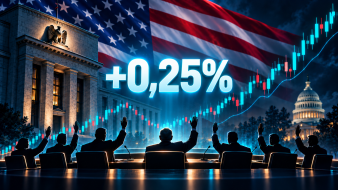
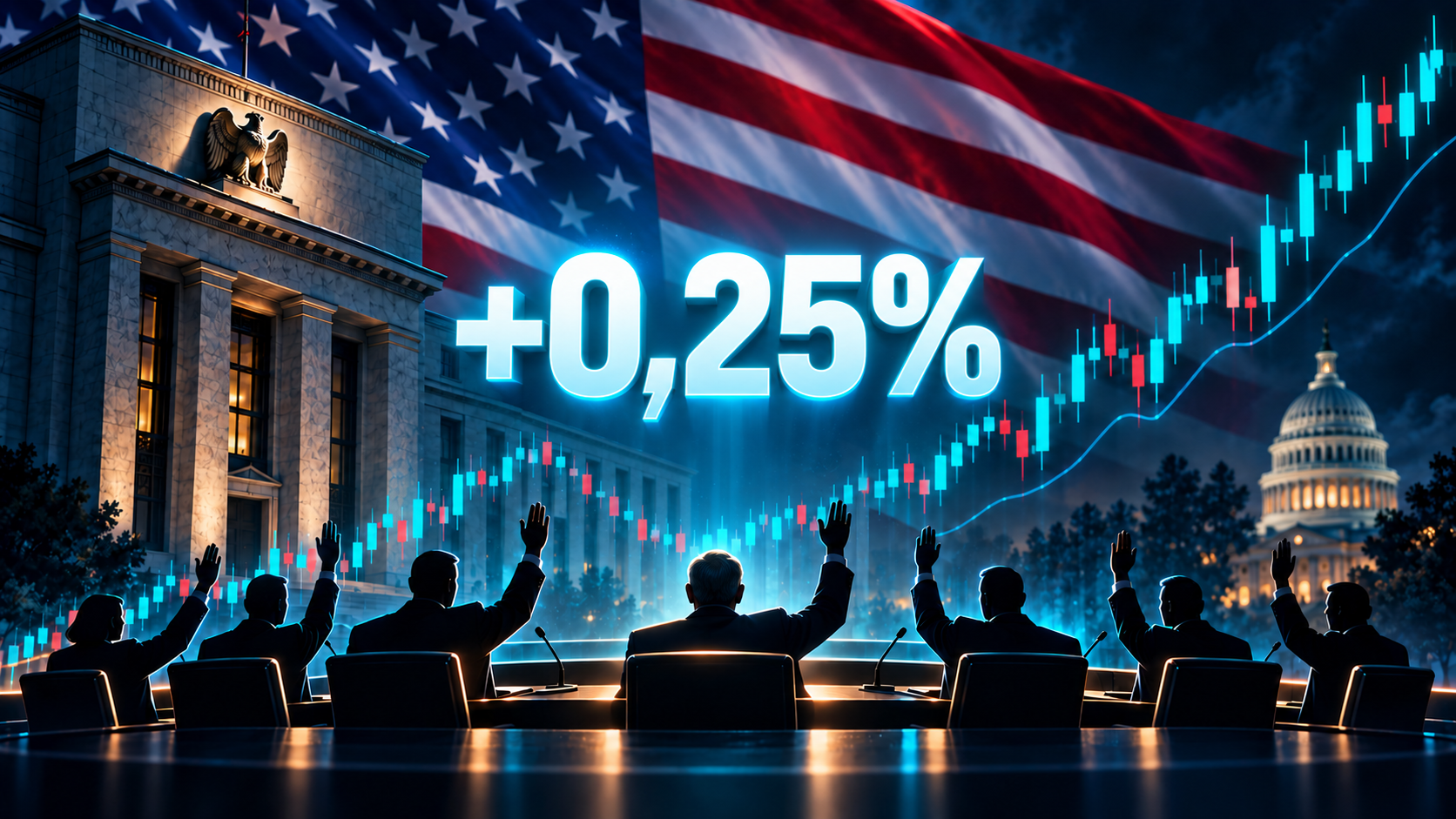
Following the conclusion of its 16 September meeting, the Federal Open Market Committee voted unanimously to raise rates by 0.25 percentage points. This brings the target range to 3.75%–4.00%.
Why is the Fed raising interest rates again?
Inflation remains the main reason.
According to the Fed, economic activity in the United States continues to expand at a solid pace, consumer spending remains resilient, and the labour market is showing no signs of significant weakness. At the same time, inflation remains above the 2% target.
Fed Chair Kevin Warsh said that financial conditions could hardly be described as restrictive. In other words, despite the high interest rates seen so far, the economy continues to have access to sufficient capital and liquidity.
That is why the central bank is removing another part of its accommodative monetary policy.
Will there be another rate increase?
The Fed’s latest projections suggest that the rate-hiking cycle may not be over yet.
Sixteen of the 18 officials who published projections expect at least one more 25-basis-point increase by the end of the year. This would bring the key interest rate into a range of 4.00%–4.25%.
Future decisions will depend primarily on inflation data, economic growth, the labour market and energy prices.
How did the crypto market react?
The immediate reaction was relatively calm.
Following the decision, Bitcoin traded at approximately $75,000–$76,500, while Ethereum remained between $2,370 and $2,430. Most leading crypto-assets stayed close to their pre-meeting levels.
The reason is that the increase had already been largely priced in. Shortly before the decision, markets were pricing in a probability of more than 90% for a 25-basis-point increase.
Bitcoin’s reaction, however, should also be viewed in a broader context.
Just one day earlier, the CLARITY Act failed to secure the 60 votes required to advance in the U.S. Senate. Within the space of two days, the crypto market therefore received two pieces of negative news – the failure of a key bill to advance and the first interest rate increase since 2023.
Despite this, no panic followed.
This reaction was also discussed by Altcoins.bg founder Rostislav Totev. In his analysis, he examines what these developments mean for the crypto market and why the more important question is no longer what happened, but what the market has already priced in and what could surprise it from here.
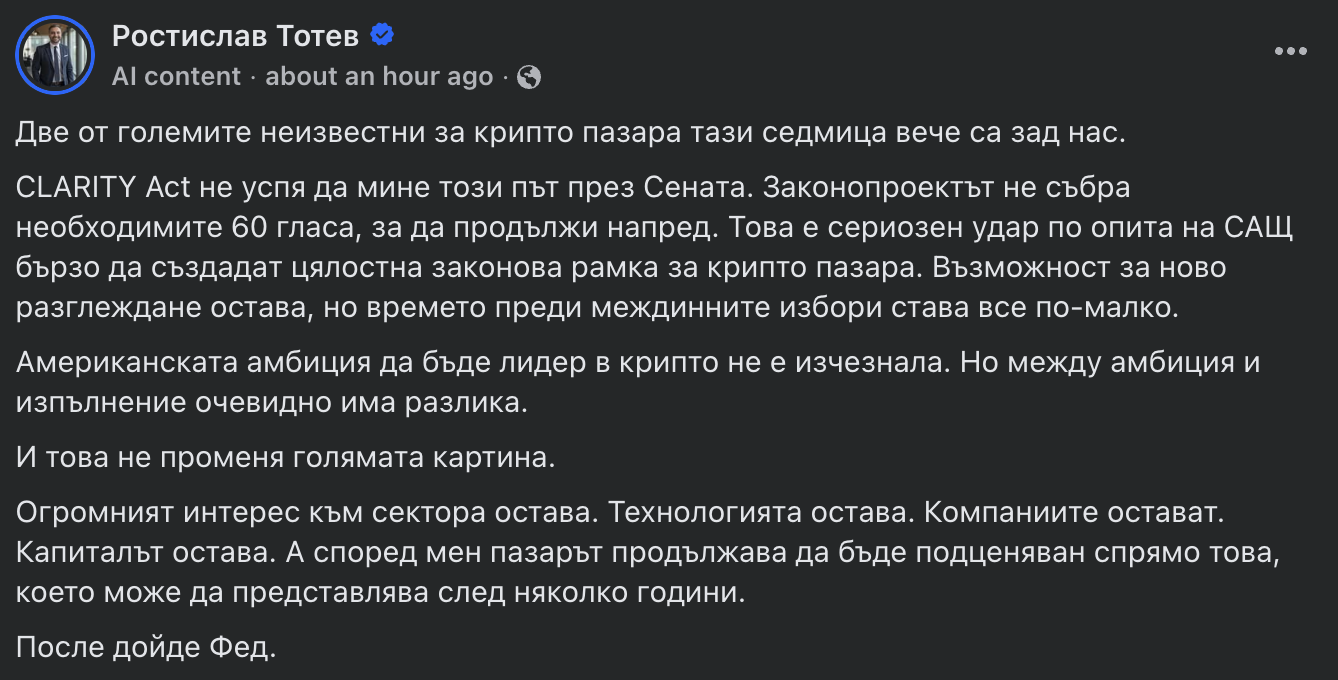
Read Rostislav Totev’s full commentary on Facebook →
Why do high interest rates matter for Bitcoin?
Higher interest rates generally create a more challenging environment for risk assets.
Government bonds and other traditional financial instruments begin to offer better returns at lower risk. Financing becomes more expensive, liquidity declines, and the dollar often strengthens. All of this can limit the amount of capital flowing into crypto markets.
However, this does not mean that every interest rate increase automatically causes Bitcoin to fall. When a decision is widely expected in advance, the reaction is often limited. Markets tend to focus more on what comes next than on a change that has already been announced.
What comes next?
In the short term, attention will turn to the next inflation data and signals from the Fed ahead of its October and December meetings.
If inflationary pressure remains strong, the possibility of another rate increase will continue to weigh on risk assets. Weaker economic data or slowing inflation could shift expectations and bring some interest back to Bitcoin and the broader crypto market.
For now, the main takeaway is clear: the increase was expected and did not cause a major shock. The bigger question is how long interest rates will remain high and whether the Fed will take another step higher before the end of the year.