

From $64,000 to $73,000 in 24 hours: What happened to Bitcoin?
In our previous article, we discussed the unusual calm in the crypto market – Bitcoin was trading relatively steadily, retail investor interest remained weak, and much of the market seemed to be simply waiting for the next major catalyst.
Well, we didn't have to wait long.
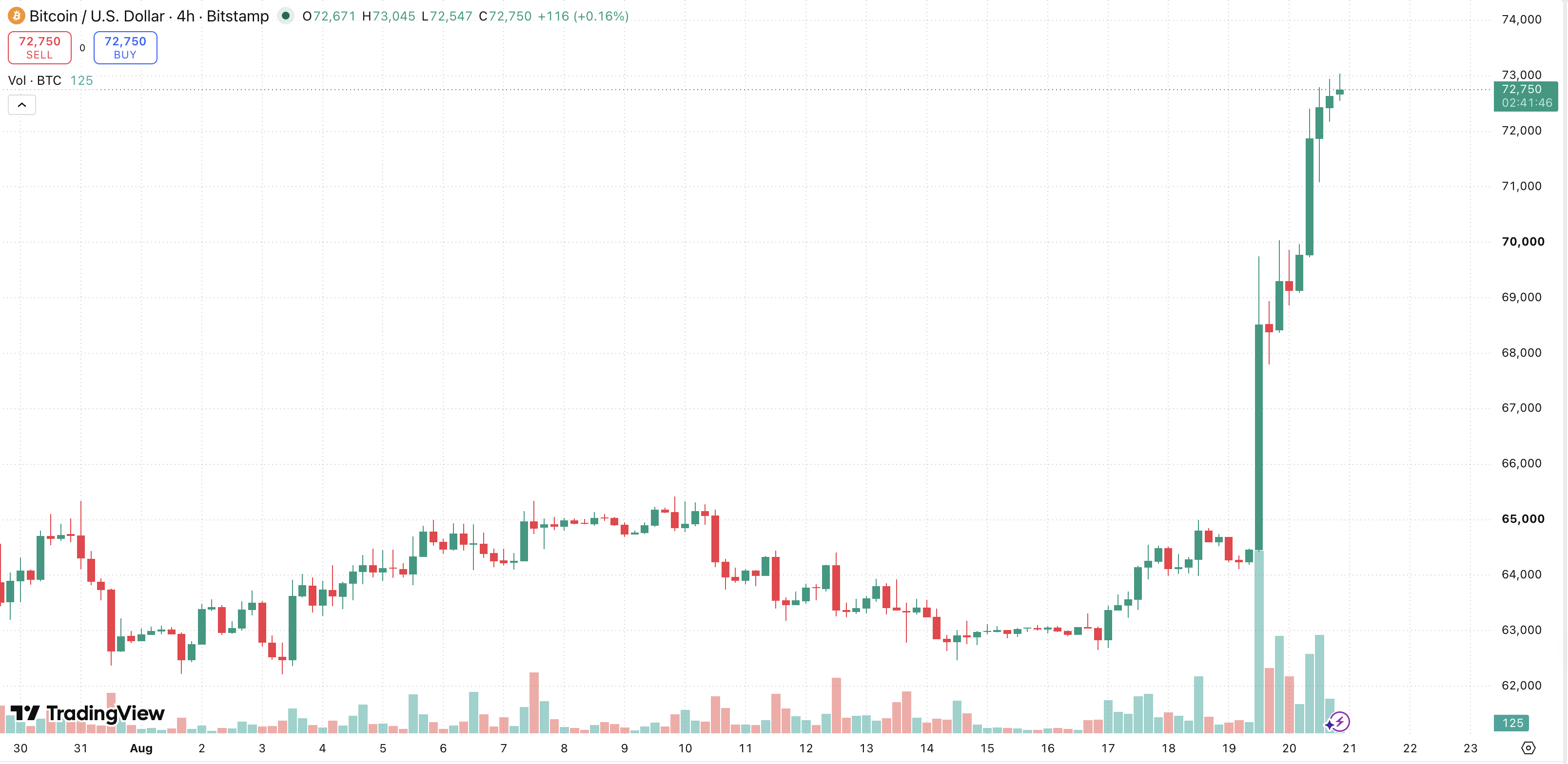
In just around 24 hours, Bitcoin jumped from approximately $64,400 to nearly $73,000, and the move was triggered by news that, at first glance, had almost nothing to do with crypto.
It All Started in the U.S. Bond Market
The U.S. Treasury announced that it will at least double the size of its buyback operations for long-term government bonds – from $2 billion to at least $4 billion per operation, starting September 9.
The reason?
The yield on 30-year U.S. Treasury bonds reached 5.337% – its highest level since 2007.
Put simply, long-term financing for the U.S. government is becoming increasingly expensive, while demand for these bonds is weakening.
And the Treasury decided to step in.
The market immediately interpreted this as a signal that authorities were prepared to support the bond market if the pressure became too intense. The 30-year Treasury yield declined, and Bitcoin reacted almost immediately.
Then Came the Short Squeeze
The rally caught a large part of the market off guard.
Many traders had positioned themselves for Bitcoin to continue falling. When the price suddenly started surging, those positions began to close involuntarily.
The result was nearly $1.1 billion in liquidated short positions, with more than $1 billion of them closed within approximately one hour.
This added even more momentum to the move and helped Bitcoin climb from around $64,000 to above $70,000 at remarkable speed.
And This Is Where the Story Gets Even More Interesting
One of the factors contributing to the pressure in the bond market could be the AI boom itself.
Amazon, Alphabet, Meta, Microsoft, and Oracle are issuing increasing amounts of debt to finance their massive investments in AI infrastructure and data centers.
Between 2020 and 2024, these companies issued an average of around $28 billion in debt per year.
In 2025, that figure reached $121 billion.
And in just the first five months of 2026 – $159 billion.

In practice, this means that tech giants are increasingly competing with the U.S. government for capital from the same pool of investors.
What Does This Mean for Bitcoin?
Lower long-term interest rates, greater liquidity, and a weaker dollar have traditionally created a more favorable environment for risk assets and assets with limited supply.
And that is exactly why Bitcoin's reaction was so strong.
The next important date is September 9, when the larger U.S. Treasury debt buyback operations are expected to begin.
Just a few days ago, the market looked almost asleep.
Today, Bitcoin reminded us once again just how quickly that can change.