

Bitcoin falls below $65,000: Mass liquidations and macro pressure.
On Sunday night, the crypto market reminded us how quickly sentiment can shift.
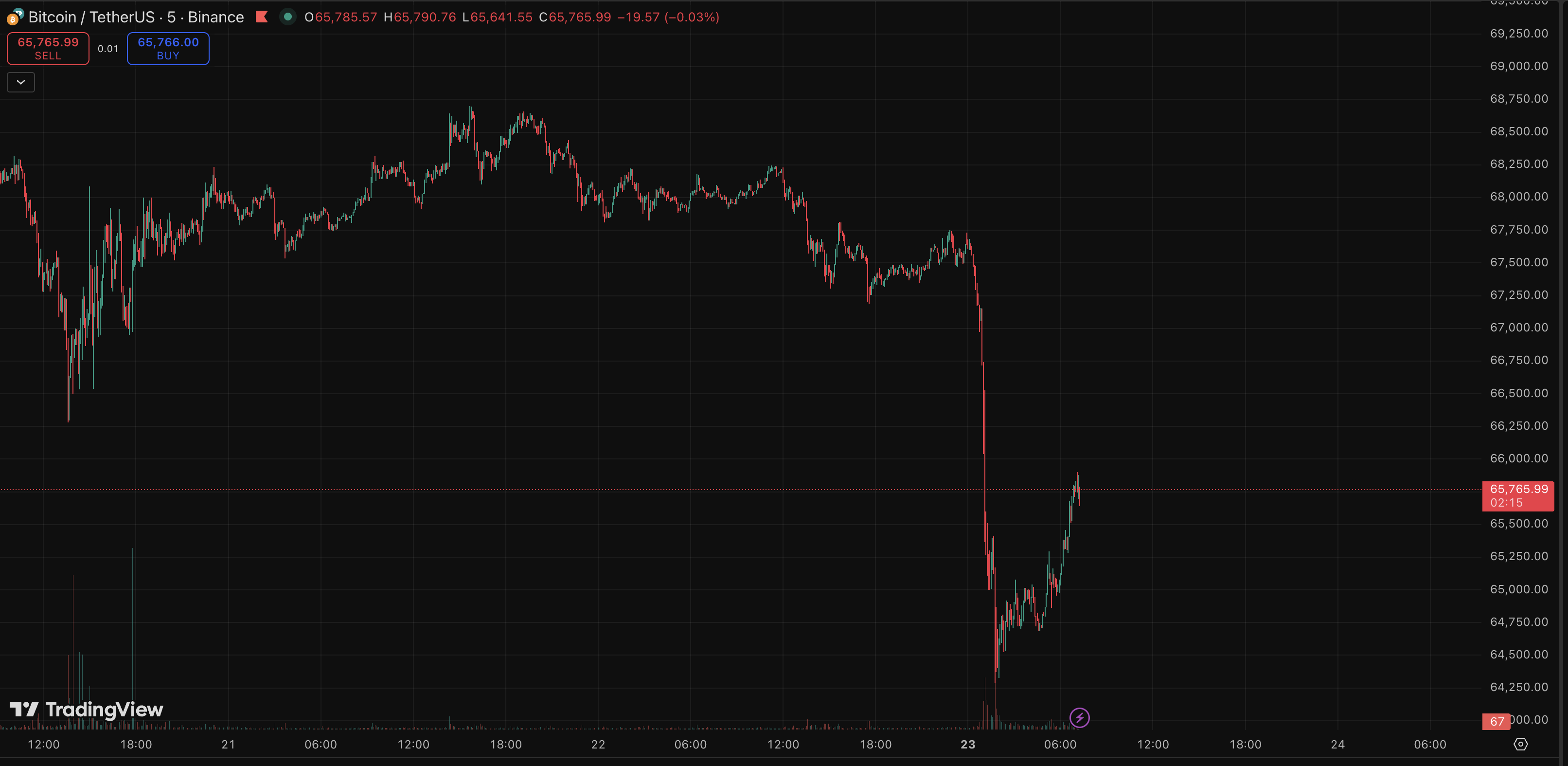
Bitcoin dropped from around $67,600 to below $65,000 in less than two hours, wiping out more than 4% of its value. The move didn’t stay isolated.
Ethereum lost nearly 6%, XRP more than 6%, and Solana plunged by over 8% on the day.
In just one hour, roughly $360 million in long positions were liquidated. That means one thing – the market was overloaded with leverage, and liquidity wasn’t sufficient to absorb the shock.
What triggered the sell-off?
First, U.S. data on pending home sales showed another decline and hit the lowest level since tracking began in 2001. Put simply, fewer people are signing preliminary agreements to buy homes. This is an early indicator of cooling in the housing sector and a signal of broader economic uncertainty. When data like this prints, investors tend to become more cautious toward risk assets.
Additional pressure came from the decision to raise overall U.S. import tariffs from 10% to 15%. A move like that increases uncertainty around trade policy and future economic growth, which automatically impacts global risk appetite.
On top of that, the Japanese yen strengthened sharply amid expectations that the Bank of Japan could shift toward tighter monetary policy. A stronger yen often forces international funds to reduce leveraged positions, which can trigger sell-offs in higher-risk asset classes, including crypto.
Key levels to watch
According to market analysts:
- $60,000 is the zone that could act as support
- A move back above 65–66K would stabilize price action in the short term
- A breakout above 70K would be a clear recovery signal
But everything remains highly dependent on the macro backdrop and ETF flows.
Is there light at the end of the tunnel?
Despite the sharp drop, the picture doesn’t look that negative.
On the one hand, large wallets continue to accumulate. Based on recent weeks of data, so-called “whales” have added roughly 200,000 BTC to their positions. That is usually a sign that longer-term participants don’t view the current move as a structural breakdown, but as a cyclical phase of weakness.
On the other hand, some market indicators are already entering zones that historically have aligned with cycle bottoms. Bitcoin’s short-term Sharpe ratio reached levels seen in 2015, 2019, and 2022 – periods that were later followed by strong upside moves.
Add to that potential regulatory developments in the U.S. that could bring more clarity and unlock new institutional capital. If macro stress begins to ease and we see stabilization in ETF flows, the conditions for a more meaningful rebound should gradually improve.
In other words – the market is under pressure, but the fundamental picture doesn’t look broken. The question isn’t whether there will be a recovery, but when the environment will allow it to fully unfold.
What does this mean for you?
In moments like this, the most dangerous thing isn’t the move down itself.
The danger is making rushed decisions.
The market showed us three things:
- Leverage accelerates declines
- Macro factors now directly impact crypto
- Liquidity matters, especially during sudden shocks
This isn’t a crash caused by a problem in Bitcoin itself. It’s a reaction to global uncertainty. And history shows that when uncertainty fades, recoveries are often just as sharp.
If you’re just getting into crypto
The biggest mistake is waiting for the “perfect moment.” The market rarely gives a clear signal. What matters more is how you manage risk and how you build your position over time.
On Altcoins.bg, you can buy and sell crypto assets quickly and easily, with Bulgarian support and clear terms. No unnecessary complexity and no confusion.
And if you want to understand what’s happening behind market moves, you can start with our blog, where we explain the processes in a clear and accessible way.
The market will keep moving.
The question is whether you’ll be prepared.