

The week that could shake up the markets: inflation, oil, and crypto
We have another week ahead with a packed economic calendar.
And when we talk about financial markets, macroeconomics affects almost everything: stocks, bonds, and, of course, crypto.
That is why it is important to watch what is happening outside the crypto sector itself. Sometimes that is exactly where the signals for the next major market move are hiding.
Here are the events that will be in investors’ focus this week.
Macroeconomics: inflation, oil, and economic growth
Several key U.S. economic indicators will provide a clearer picture of the state of the economy.
Tuesday – Existing Home Sales
The data on existing home sales will show whether the U.S. housing market is becoming more active or continuing to cool down.
Wednesday – CPI inflation
The Consumer Price Index will show whether inflation accelerated in February or is starting to slow down.
Friday – several key indicators
- GDP for Q4 2025 – whether the U.S. economy continued to grow in the final quarter of the year
- PCE inflation – the Federal Reserve’s preferred inflation measure
- JOLTS Job Openings – an indicator of the strength of the labor market
In other words, Friday could turn out to be the busiest day of the week.
Two things markets are watching especially closely
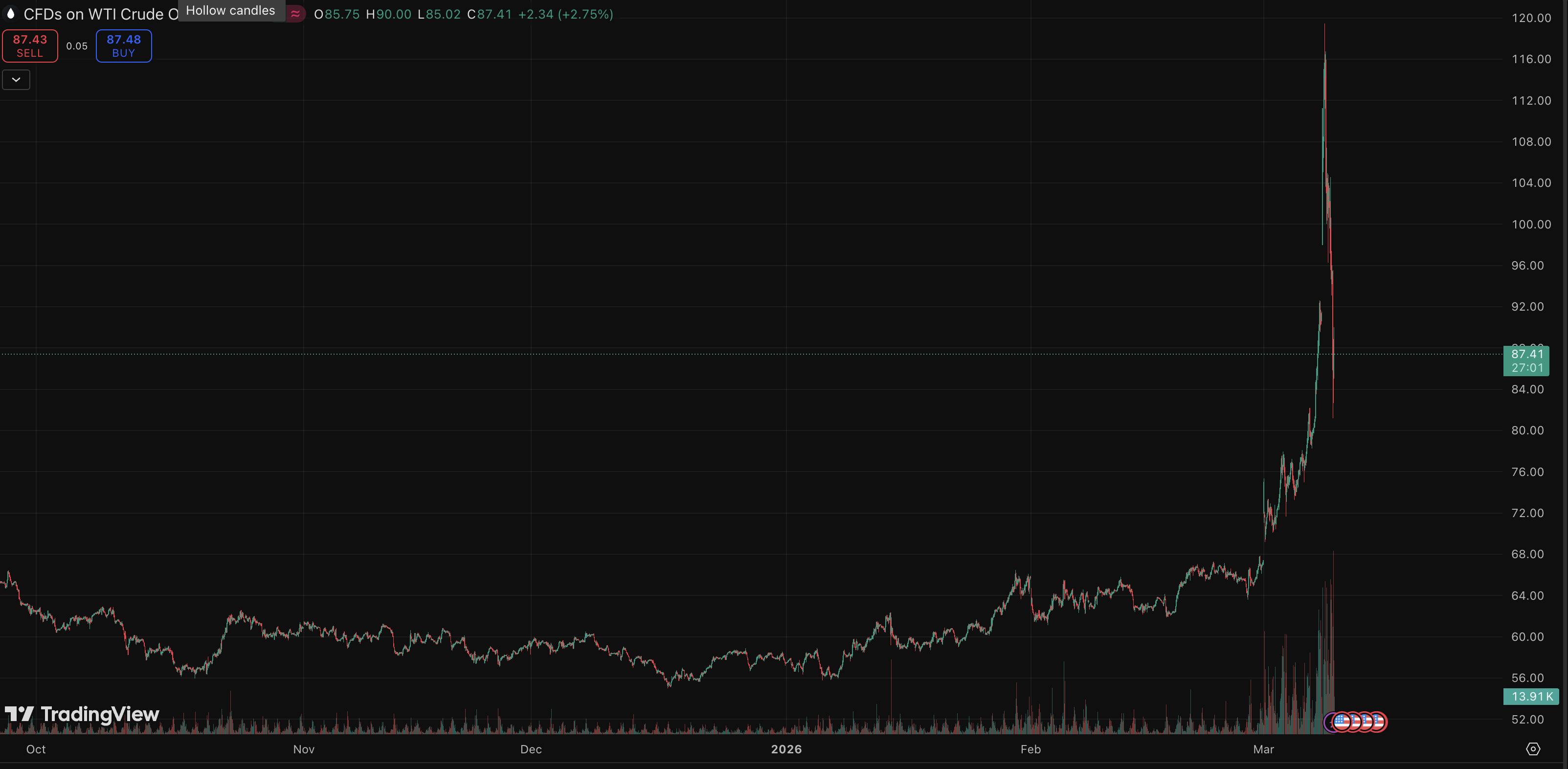
The price of oil
If the price of oil continues rising without a clear ceiling, that could create problems for the global economy.
More expensive oil means:
- higher inflationary pressure
- slower economic growth
- risk of tighter monetary policy
And when central banks tighten conditions, that usually affects all asset classes, including crypto.
PCE inflation
PCE is a broader inflation measure and is the Federal Reserve’s officially preferred indicator.
If this measure starts to slow, it increases the chances of future interest rate cuts.
At the moment, however, market expectations suggest that the first rate cut may not come until around July.

Politics and regulation: the debate around CBDCs
A new political dispute is intensifying in the U.S. around central bank digital currencies, known as CBDCs.
Some Republicans are threatening to block a bipartisan housing bill because of a clause connected specifically to this issue.
Under the current proposal, the issuance of a retail CBDC would be banned until 2031. Some politicians, however, want that ban to become permanent.
The main concern is linked to control over personal finances. Critics believe such a system could allow the central bank to have real control over every transaction made by citizens.
In addition, with so-called programmable money, extra conditions could be added, such as:
- restrictions on how funds can be used
- expiration dates on money
- other automatic rules and control mechanisms
That is why the topic of CBDCs remains one of the most discussed and sensitive issues in the economic and political environment.
And what is happening in the crypto market?
Despite all the macroeconomic and political developments, the crypto market is showing surprising resilience.
Over the last 24 hours, the total crypto market capitalization has outperformed:
- The S&P 500
- Nasdaq
- Gold
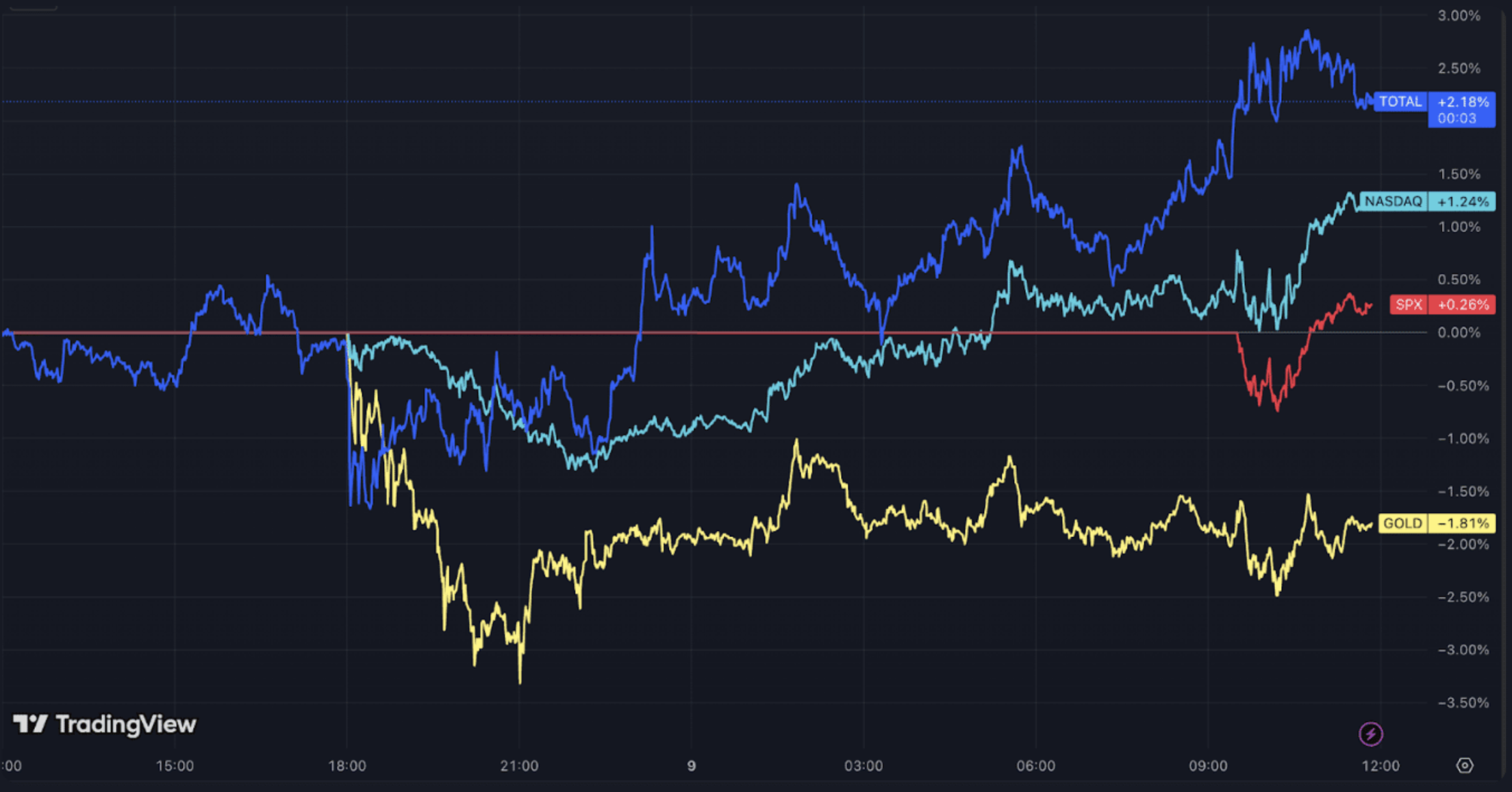
This suggests that seller pressure may gradually be starting to weaken.
One of the market’s theories over the past few weeks has been exactly that most sellers may have already exhausted their positions.
If that trend is confirmed over the next few days, we could see a more stable market.
What does this mean for investors?
This week will be heavily dependent on macroeconomic data and geopolitical news.
The main factors that will move markets are:
- developments in the conflict in the Middle East
- the price of oil
- U.S. inflation data
- expectations for future rate cuts
The crypto market is showing resilience, but as always, the macro environment remains the key factor.
That is why tracking these events matters not only for traditional markets, but for crypto investors as well.