Oil has become the most important indicator for the crypto market. Here's why.
While the conflict between Iran and allied forces continues to escalate, another factor is beginning to dominate financial markets - the price of oil.
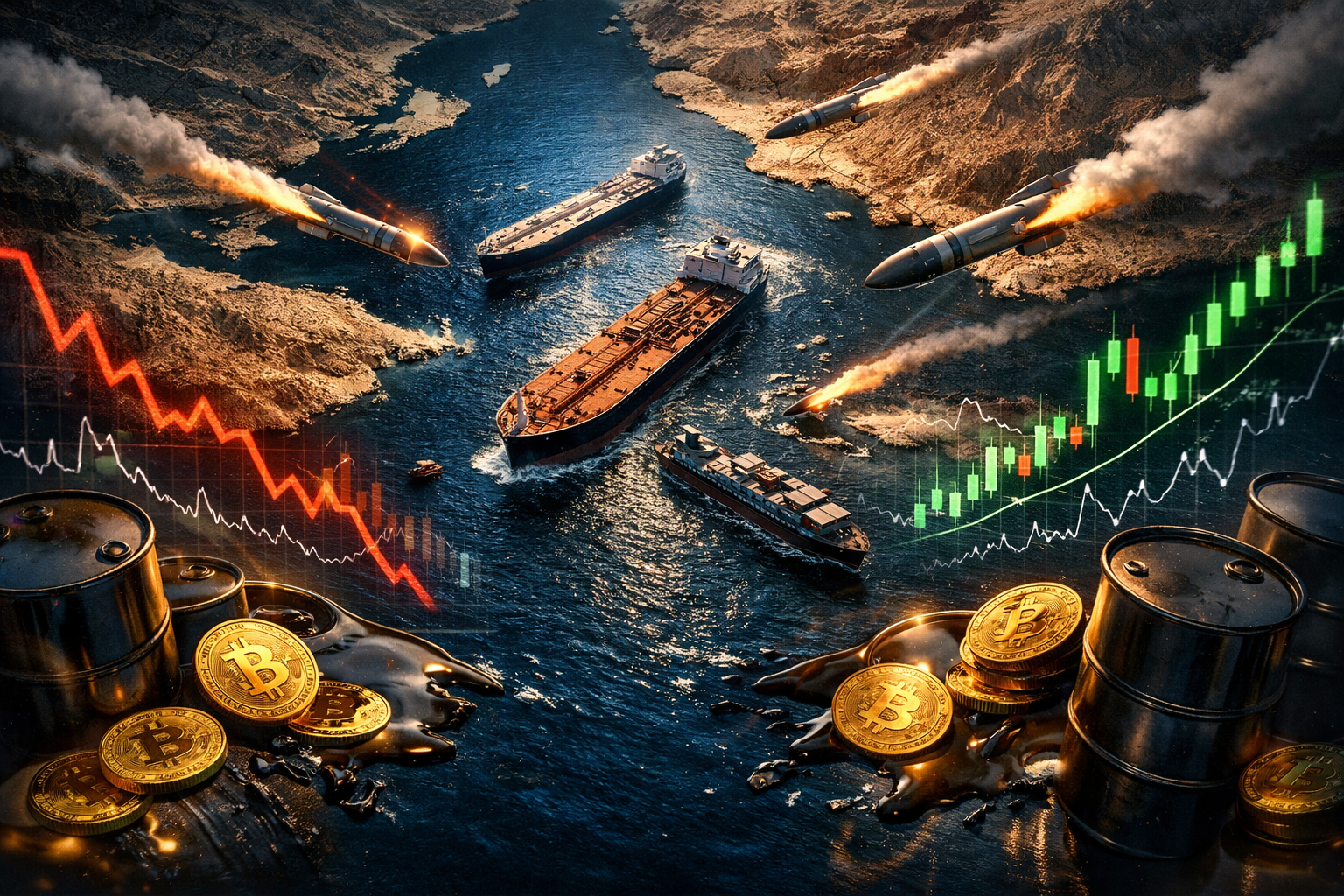
Following the blockade of the Strait of Hormuz, a key route through which a significant share of the world’s oil passes, global energy markets have begun to feel intense pressure. According to the International Energy Agency, this could turn into one of the largest oil supply disruptions in history.
But what does this mean for risk assets like crypto?
Let’s take a closer look.
How do markets react to geopolitical events?
Historically, when a major geopolitical shock occurs, the S&P 500 tends to react in a relatively predictable way:
- an initial decline
- a quick search for a bottom
- a recovery within weeks
A similar pattern is often seen in Bitcoin, which in recent years has moved increasingly in sync with traditional markets.
So far, markets appear to be following that exact scenario.

But this particular conflict has one key factor that makes it different from many others.
Energy.
Oil is becoming the most important indicator
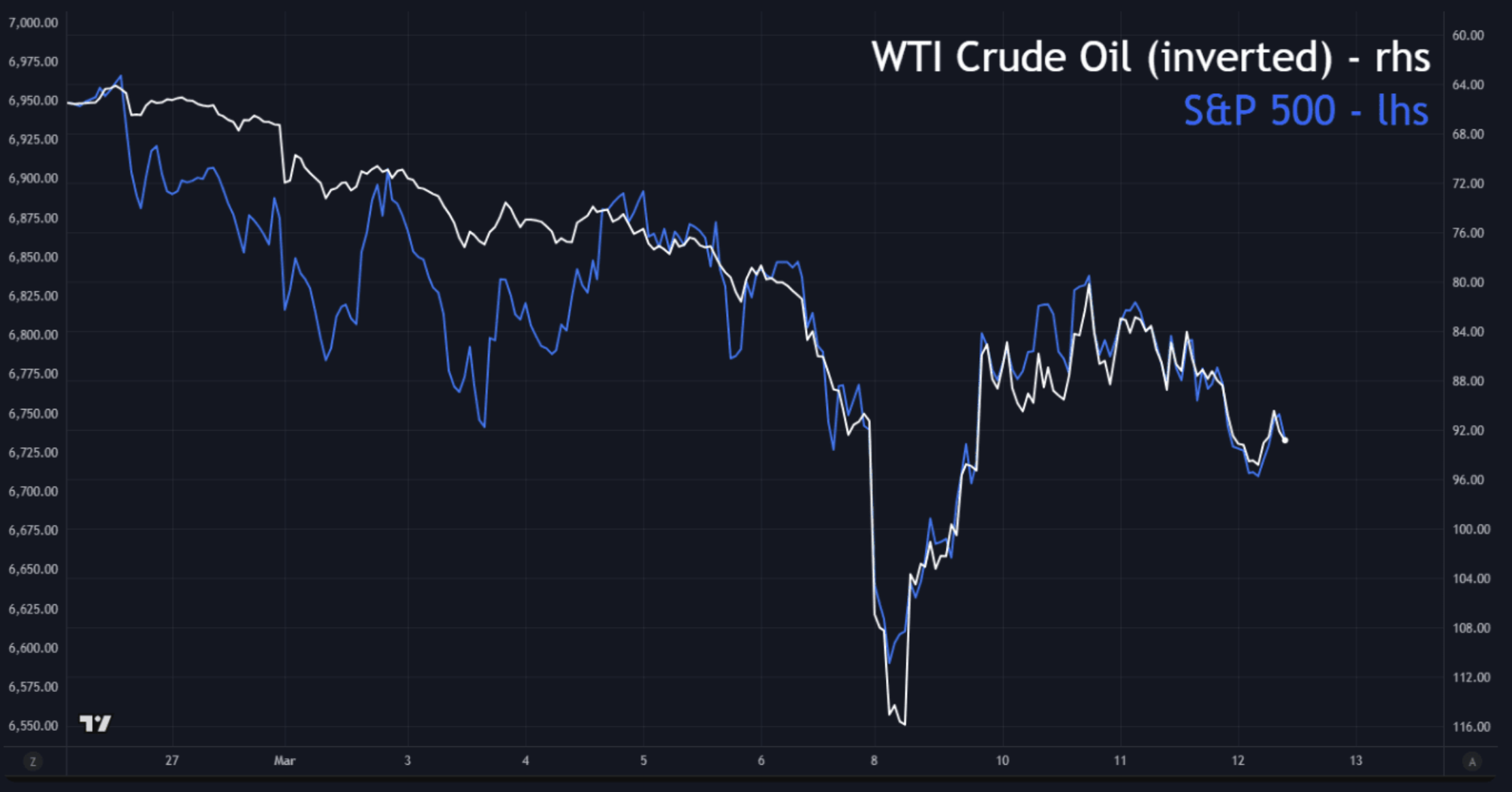
Since the beginning of the conflict, we have seen an almost perfect inverse relationship between the price of oil and risk assets:
- when oil rises → risk assets fall
- when oil falls → markets calm down
The reason is simple.
Expensive oil acts like an additional tax on the global economy. It increases transportation costs, production costs, and ultimately pushes inflation higher.
That is a scenario central banks do not like.
And when monetary policy remains tight, risk assets such as stocks and crypto usually suffer.
The key question: when will the Strait of Hormuz reopen?
Right now, almost all analysis comes down to one simple question:
When will free passage through the Strait of Hormuz be restored?
The longer it remains blocked, the greater the risk that oil prices will stay elevated.
And according to some of the biggest commodity analysts, the solution will not be easy.
Jeff Currie, former head of commodities research at Goldman Sachs, believes that an effective political response is unlikely to stop prices from rising while the strait remains blocked.
A similar view has been expressed by Natasha Kaneva of JP Morgan, who emphasizes that ensuring safe passage for every tanker would require enormous naval resources and coordination among allies.
Which zone is the economy in?
Analysts often divide the impact of oil prices on the economy into several zones.
At the moment, we are in the so-called “headwind zone” - a zone in which high energy prices begin to put serious pressure on economic growth.
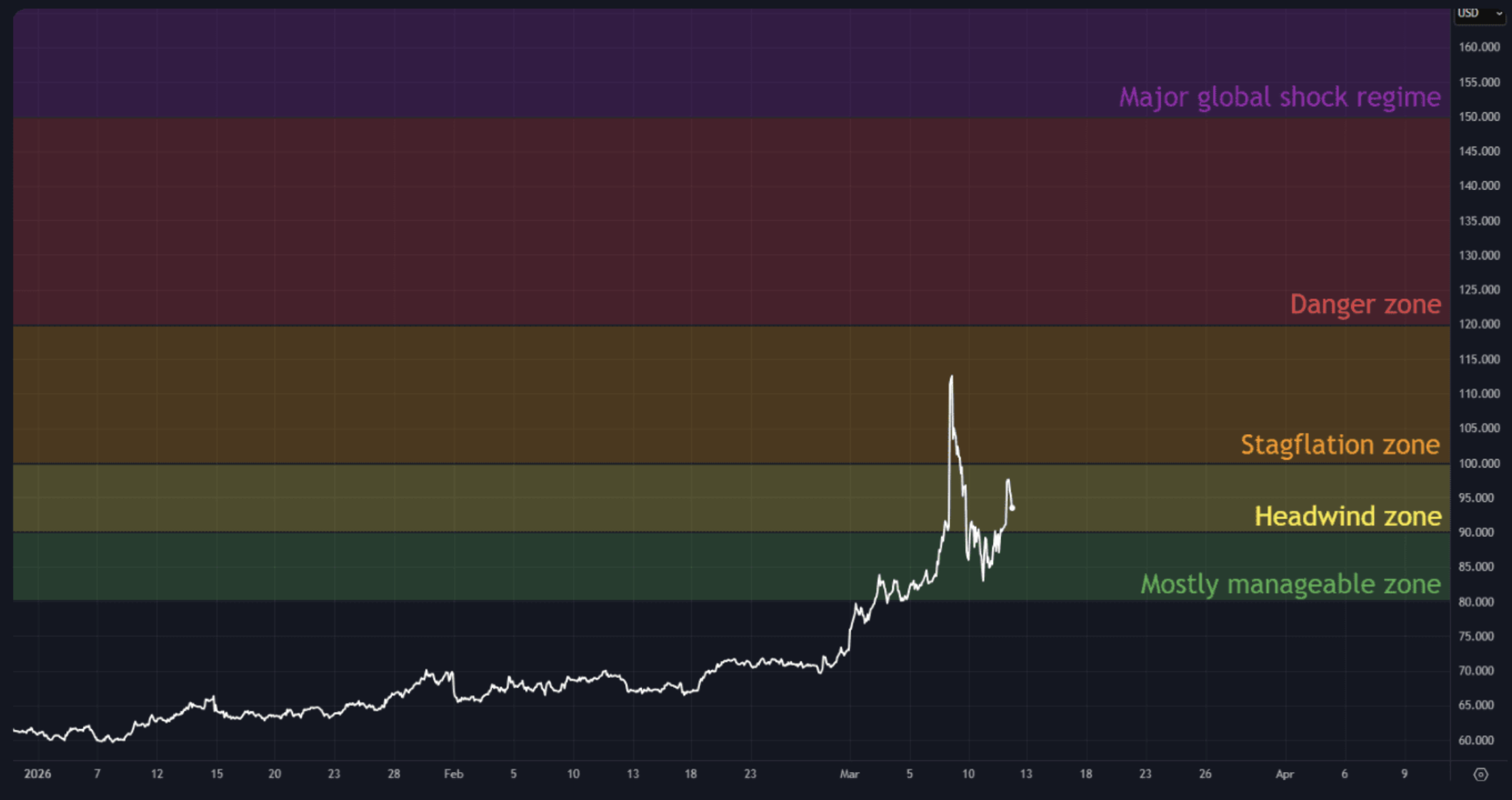
If the price of oil stays elevated or rises further and enters the “stagflation zone”, the risk for markets such as stocks and crypto increases significantly.
On the other hand, if oil manages to fall back below $80 per barrel, the pressure on risk assets will likely ease.
The worst-case scenario: market panic
There is also a more dangerous signal that analysts are watching closely.
It appears when the price of oil and U.S. Treasury yields begin moving in opposite directions.
Right now:
- oil is rising
- bond yields are also rising
That shows the market is mainly worried about inflation.
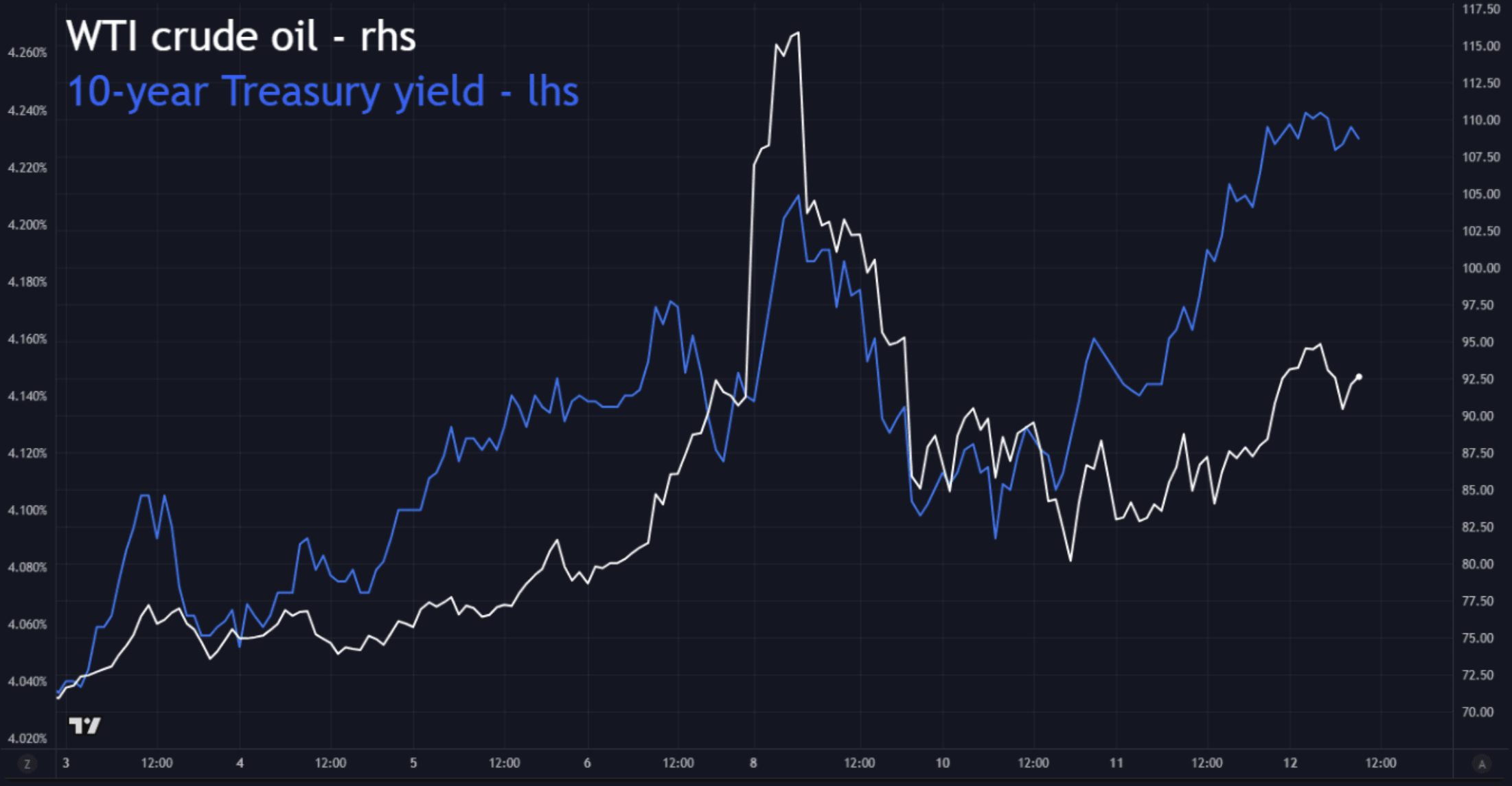
But if we reach a point where:
- oil keeps rising
- yields start falling
that could mean the fear has shifted - from inflation to economic slowdown or recession.
And that would be a much worse scenario for cryptoassets.
The best-case scenario: a quick resolution
Of course, there is also a more positive outcome.
If the Strait of Hormuz reopens relatively quickly and oil flows normalize, energy prices will likely calm down.
In that case, markets could react with a strong recovery - the so-called “peace dividend”.
Historically, situations like this have often led to a sharp rebound in cryptoassets once geopolitical tension begins to fade.

Conclusion
At the moment, the crypto market is not being driven only by internal factors such as ETF flows, the halving, or institutional demand.
The bigger picture is macroeconomic.
Two factors matter most:
- the Strait of Hormuz
- the price of oil
If the blockade continues for a long time, pressure on crypto will likely increase.
If the situation is resolved quickly, markets could react with a strong recovery.
One thing is certain - over the coming weeks, the oil chart may be even more important to the crypto market than the chart of Bitcoin itself.